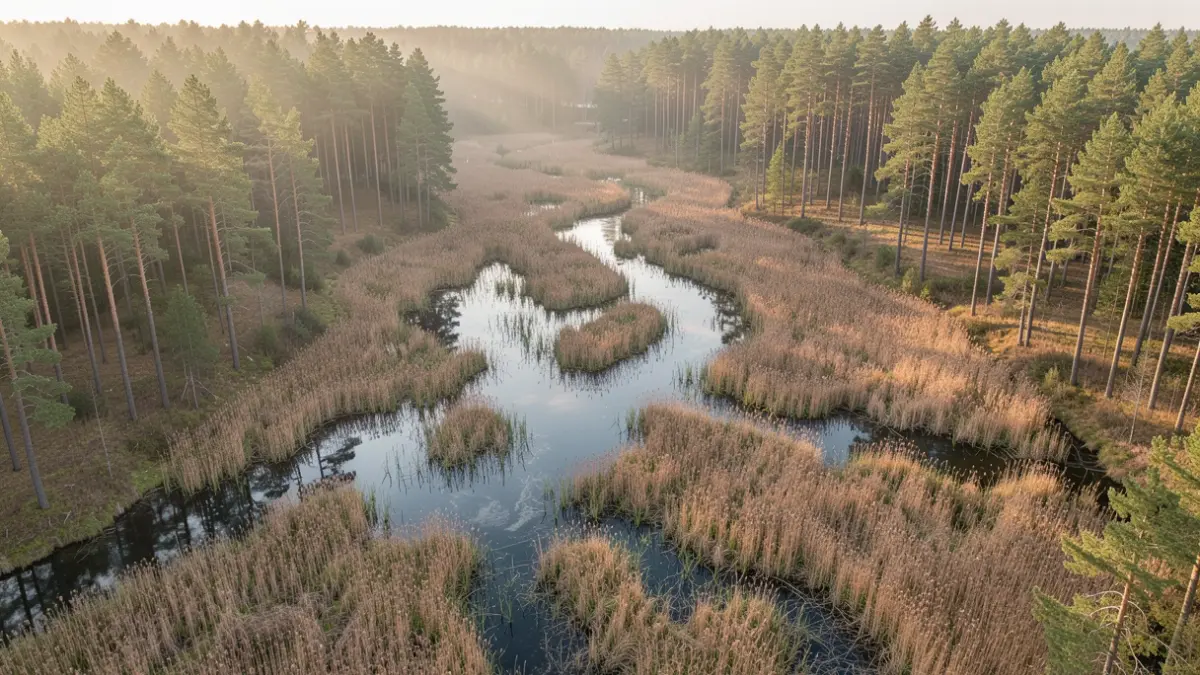
Natural Resources Institute Finland (Luke) led the project investigating the effects of wetland restoration. Wetlands act as vast carbon stores, but when they dry out, they can become significant sources of greenhouse gas emissions. Investment in wetland restoration in Europe has increased, but more research was needed on long-term effects.
Project coordinator and special researcher at Luke, Liisa Ukonmaanaho, emphasised that restoration effects can be contradictory. Measures beneficial for the climate may cause harm to water bodies, landowners' livelihoods, or recreational use. Outcomes depend on the wetland type and methods used.
Research was conducted in nine countries, establishing local Living labs environments. In Finland, research sites included drained forest mires, where measures such as damming ditches and raising water levels were tested. In Latvia, former peat production areas were studied, while in Spain, coastal wetlands and mountain wetlands were examined.
A key result of the project was the European wetland map produced by Luke, providing information on the location, extent, and types of wetlands. The map helps identify areas where restoration could significantly reduce greenhouse gas emissions. The project also developed a web tool to guide mire restoration.